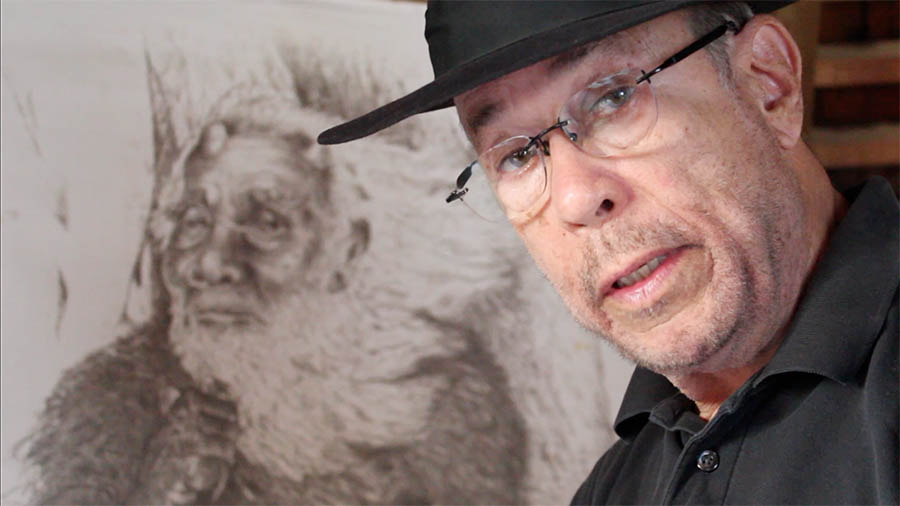
Trinidad’s folklore actually took root here from the 1780s
with the arrival of enslaved Africans and the French-speaking planters who were
themselves a mixture of both white, black and mixed-race people.
They hailed from the French islands, Grenada, St. Lucia,
Dominica, Martinique, Guadeloupe, with some even as far away as Haiti. Our
folklore expresses an element of syncretism that joined West African religious
beliefs with Catholicism against the dominant French culture of Trinidad in
those long time days. All the characters have French names.
They are essentially of African origin. The picture
presented is full of colour and decorated with a wealth of detail, all in keeping
with well-recognised West African traditions.
As such, the island's folklore, its many supernatural
figures, possesses characteristics that are similar to those of West African
deities. Indeed, it is difficult to draw a dividing line between the strictly
religious elements and what may be described as "legendary traditions”.
These myths and legends, as they are now known, were
originally teaching stories that warned, for instance, against the wanton
destruction of the forest, as in the case of Papa Bois.
Papa Bois is remembered as the old man of the forest and is
known by many names, including "Maître Bois" and "Daddy
Bouchon". He may be associated with Papa Legba who serves as the guardian
of the Poto Mitan—the centre of power and support in the home.
Papa Bois appears in different forms, sometimes as a deer or
in old ragged clothes, sometimes hairy and though very old, extremely strong
and muscular, with cloven hoofs and leaves growing out of his beard. As the
guardian of the animals and the custodian of the trees, he is known to sound a
cow's horn to warn his friends of the approach of hunters. He doesn’t tolerate
killing for killing’s sake, or the wanton destruction of the forest.
There are many stories of Papa Bois appearing to hunters.
Sometimes he turns into a deer that would lead the men into the deep forest and
then he would suddenly resume his true shape, to issue a stern warning and then
to vanish, leaving the hunters lost or perhaps compelling them to pay a fine of
some sort.
If you should meet with Papa Bois be very polite. "Bon
jour, vieux Papa," or "Bon matin, Maître," should be your
greeting. If he pauses to pass the time with you, stay cool, and do not look at
his feet.
The La Diablesse is the spirit of women who have been
wronged by bad men. She never haunts women. She is the dark side of Erzulie or
Ezili, the Haitian/West African spirit of love, dancing, luxury, beauty,
jewelry and flowers.
The La Diablesse is sometimes personified as an old crone
who steps forth with her cloven hoof from behind a tree on a lonely road, the
sound of chains mingling with the rustle of her petticoat.
Sometimes she appears as a tall, handsome Creole woman who,
with swinging gait and erect stature, passes through a cane or cocoa field at
noon and catches the eye of a man. He then proceeds to follow her, and, never
being able to catch up with her—her feet hardly touch the ground— finds himself
lost, bewildered, far from home and he is never himself again, having lost his
shadow.
She may have a bag of bones, graveyard dirt and shells; she
may cast a spell and be perceived as young and desirable, her rich perfume
blending with the smell of damp and decaying things. Although she may appear
young, she will be dressed in the ancient costume of these islands: a brilliant
madras turban in which “zepingue tremblant” (trembling pins of gold) catch the
dim moonlight, a low chemise with half sleeves and much embroidery and lace,
and all the finery of the by-gone days.
She is the nemesis of the horner man, the womaniser, the
wife beater. What she can do for you is give you something far worse than
tabanka.
"Mama Dlo" or "Mama Glo" is a water
spirit, perhaps reminiscent of Yemanjá, a water goddess from the Yoruba
tradition. She warns against vanity. “Battle not with monsters, lest ye become
a monster, and if you gaze into the abyss, the abyss gazes also into you.”
Her name is derived from the French "maman de l'
eau" which means "mother of the water". A hideous creature, her
lower half takes the form of an anaconda. She is sometimes thought to be the
lover of Papa Bois, and old hunters tell stories of coming upon them in the
high woods. They also tell of hearing a loud cracking sound, which is said to
be the sound made by her tail as she snaps it on the surface of a mountain pool
or a still lagoon.
Mortal men who commit crimes against the forest, like
burning down trees, indiscriminately putting animals to death or fouling the
rivers, could find themselves married to her for life, both this one and the
one to follow.
Sometimes she takes the form of a beautiful woman “singing
silent songs on still afternoons, sitting at the water's edge in the sunlight,
lingering for a golden moment, a flash of green—gone.” If you were to meet Mama
Dlo in the forest and wish to escape her, take off your left shoe, turn it
upside down and immediately leave the scene, walking backwards until you reach
home.
The Soucouyant: “A ball of flame, along she came flying without a wind,” was
how the Soucouyant of Saut d'Eau island was described.
She is the old woman who lives alone at the end of the
village road, seldom seen, her house always closed up as she sleeps away the
day. As evening draws near, she stirs and sheds her old and wrinkled skin,
which she deposits into a mortar that she hides carefully away. Now, as a
glowing ball of flame, she rises up through the roof and with a shrill cry that
sets the village dogs howling, she flies through the night in search of a
victim, and she would suck his life-blood from him clean.
As the blessed day dawns, she makes a beeline through the
forest for her home, finds the mortar with her wretched skin and proceeds to
put it on. But something's wrong, it burns like fire, it seems to shrink and
slide away! "Skin, kin, kin, you na no me, you na no me," she sings,
crooning softly, pleading to the wrinkled, dreadful thing. "You na no me,
old skin." Then, with horror, she realises the dreadful thing that has
been done: the village boys and men have filled her skin with coarse salt and
pepper and will soon come and get her, with a drum of boiling tar, the priest
and his silver cross, the church bells—and then, the end.
This is a witch story. One has to be very careful about
witch stories, because women often outlive their husbands and end up owning
house and land. It is easy to suspect that the old woman who lives alone is a
Soucouyant, so that what she has could be taken from her. Soucouyant comes from
the French word soupçon, which means suspicion.
"Duennes" are spirits of children who died before
they were baptised and as such, they are fated to roam the by-ways of Trinidad,
practicing their wide repertoire of pranks on living children who are enticed
away only to return later on as if nothing ever happened. Duennes are depicted
as sexless, their feet are turned backwards, demonstrating that they come from
the other side, and they have no faces (although they do have small round
mouths). On their rather large heads they wear huge mushroom-shaped straw hats.
To prevent the Duennes from calling your children, never
shout their names in open places, as the Duennes will take their names, call
them and lure them away.
The child, however, is not affected in any way by the Duenn.
It is the mother, the father, the child’s guardian who is haunted by the Duenn.
Imagine you come home and you can’t find your child. You become hysterical. That is the Duenn. It is inside your
head.
Here is a story of a Jumbie. A man called Lastique, who was
riding home one night, as he passed the big silk cotton tree at the corner of
Belmont Circular Road and the Savannah, he heard a baby crying, so he stopped
and picked it up, thinking he would take it home for the night and carry it to
the orphanage in the morning. Cycling along, he was reduced to a state of
absolute terror as by the time he reached by Jerningham Avenue, he realised
that the child was getting bigger and heavier. Suddenly, just outside the
hospital, the child said in a man's voice, "You'd better take me back were
you found me," which the terrified Lastique did at once. As he drew nearer
the tree, the 'child' shrank steadily back to its original size and was
deposited, once more, a bawling baby at the foot of the giant tree. The moon, a
silent witness, hid its face in a cloud as a chill wind blew and a jumbie bird
flew out of the tree.
The "Ligahoo" or "Loup Garou" is the
shape changer of Trinidad's folklore. He has his origins in the Obeahman, the
poisoner on the estate from slavery days. The master is cruel. The ox falls to
its knees in the field, there is fire in the mountain, the mistress’s back is
raised with fiery welts every time he beats the old woman who is in charge of
the chamber pots. A fellow slave
can no longer live in this misery, he gives her what she needs to “go home.”
With emancipation, he is the old magic-dealing man of a
district who is both feared and respected, not only for his facility to change
his form to that of a vicious animal, but also because he has power over
nature. From him, charms and bush medicine are also readily available for a
price.
At times, the apparition may take the form of a coffin being
carried through the streets. A man, naked, greased from head to toe, carries it
on his head. He is protected by a giant "phantome". The coffin and
its gruesome attendant were once used to facilitate the uninterrupted
transportation of Bush Rum; this effect would virtually ensure its safe
passage.
At another time, the "Ligahoo" becomes the Science
Man. He reads from the Teetalbay and other forbidden books; he can make a deal
with the devil for you. In exchange for your soul, you would become famous, go
viral and become rich beyond your wildest dreams. But one night you will wake
up and the devil will be sitting on your belly. He has come for your soul.
Today he is the drug dealer, the gang recruiter.
If you want to see a Ligahoo and not be seen by it, take
some yampee from the corner of a dog's eye, put it in your eye and peep out of
a keyhole at 12 midnight.
It is said that those powers are handed down in some old
families from one generation to the next, and that is why there are so many
Ligahoos among us.
Cric-crac,
monkey break he back
for a piece of pomerac
that’s the way the wire bends
and the way the story ends.
Cric-crac!
Our folklore is predominantly of African origin, flavoured with French and to a lesser degree, Spanish and English influences. In keeping with well-recognized African traits, the picture is full of colour and decorated with a wealth of detail. Religious or semi-religious cults of African origin have undoubtedly contributed much to the Island's folklore; many of the supernatural folklore figures possess characteristics which are identical with those of African deities. Indeed, it is extremely difficult to draw a dividing line between the strictly religious elements and what may be described as "legendary traditions".
"Papa Bois" is the most widely known of all our folklore characters. He is the old man of the forest and is known by many names, including "Maître Bois" (master of the woods) and "Daddy Bouchon" (hairy man).
Papa Bois appears in many different forms, sometimes as a deer, or in old ragged clothes, sometimes hairy and though very old, extremely strong and muscular, with cloven hoofs and leaves growing out of his beard. As the guardian of the animals and the custodian of the trees, he is known to sound a cow's horn to warn his friends of the approach of hunters. He doesn’t tolerate killing for killing’s sake, and the wanton destruction of the forest.
There are many stories of Papa Bois appearing to hunters. Sometimes he turns into a deer that would lead the men into the deep forest and then he would suddenly resume his true shape, to issue a stern warning and then to vanish, leaving the hunters lost or perhaps compelling them to pay a fine of some sort, such as to marry "Mama Dlo".
If you should meet with Papa Bois be very polite. "Bon jour, vieux Papa" or "Bon Matin, Maître" should be your greeting. If he pauses to pass the time with you, stay cool, and do not look at his feet.
"La Diablesse", the devil woman of Trinidad and Tobago folklore, is sometimes personified as an old crone, who steps forth with her cloven hoof from behind a tree on a lonely road, the sound of chains mingling with the rustle of her petticoat.
Sometimes she takes the form of a beautiful woman, to lure some unsuspecting passerby to his death or perhaps to madness.
Sometimes she appears as a tall, handsome creole woman who with swinging gait and erect stature, passes through a cane or cocoa field at noon and catches the eye of a man who then proceeds to follow her, and, never being able to catch up with her - her feet hardly touch the ground - finds himself lost, bewildered, far from home and he is never himself again.
She may have a bag of bones, grave yard dirt and shells, she may cast a spell and be perceived as young and desirable, her rich perfume blending with the smell of damp and decaying things. Although she may appear young, she will be dressed in the ancient costume of these islands: a brilliant madras turban, chemise with half sleeves and much embroidery and lace, ‘zepingue tremblant’ (trembling pins of gold), and all the finery of the by-gone days.
If you feel you may encounter a La Diablesse on your way home, take off all your clothes, turn them inside out and put them on again, and this will surely protect you from a La Diablesse.
"Mama Dlo" or "Mama Dglo" whose name is derived from the French "maman de l' eau" which means "mother of the water" is one of the lesser known personalities of Trinidad and Tobago folklore.
A hideous creature, her lower half takes the form of an anaconda. She is sometimes thought to be the lover of Papa Bois, and old hunters tell stories of coming upon them in the 'High Woods'. They also tell of hearing a loud, cracking sound which is said to be the sound made by her tail as she snaps it on the surface of a mountain pool or a still lagoon.
Mortal men who commit crimes against the forest, like burning down trees or indiscriminately putting animals to death or fouling the rivers could find themselves married to her for life, both this one and the one to follow.
Sometimes she takes the form of a beautiful woman 'inging silent songs on still afternoons, sitting at the water's edge in the sunlight, lingering for a golden moment, a flash of green - gone. Nothing but a big Morte Bleu, rising in the sun beams.
"Did you see a fish jump?"
"Yes, but it did not go back in again!"
If you were to meet Mama Dlo in the forest and wish to escape her, take off your left shoe, turn it upside down and immediately leave the scene, walking backwards until you reach home.
"The Soucouyant" -
“A ball of flame, along she came flying without a wind” was how the Soucouyant of Saint D'eau island was described.
She is the old woman who lives alone at the end of the village road, seldom seen, her house always closed up as she sleeps away the day. As evening draws near, she stirs and sheds her old and wrinkled skin, which she deposits into a mortar that she hides carefully away. Now, as a glowing ball of flame, she rises up through the roof and with a shrill cry that sets the village dogs to howling, she flies through the night in search of a victim and she would suck his 'life-blood' from him clean.
As the blessed day dawns, she makes a beeline through the forest for her home, finds the mortar with her wretched skin and proceeds to put it on, - but something's wrong, it burns like fire, it seems to shrink and slide away, "skin, kin, kin, you na no me, you na no me", she sings, crooning softly, pleading to the wrinkled, dreadful thing. "You na no me, old skin." Then, with horror, she realizes the dreadful thing that has been done: The village boys and men have filled her skin with coarse salt and pepper and will soon come and get her, with a drum of boiling tar, the priest and his silver cross, the church bells - and then, the end.
If you wish to discover who the Soucouyant in your village is empty 100 lbs of rice at the village crossroads where she will be compelled to pick them up, one grain at a time - that is how you'll know the Soucouyant.
"Duennes" are spirits of children who died before they were baptized and as such, they are fated to roam the forests of Trinidad, practising their wide repertoire of pranks, mostly on living children who are enticed away into the forest and are then left abandoned. Duennes are sexless, their feet are turned backwards and they have no faces (although they do have small round mouths). On their rather large heads they wear huge mushroom-shaped straw hats.
To prevent the Duennes from calling your children into the forest at dusk, never shout their names in open places, as the Duennes will take their names, call them and lure them away.
A story is told of a man called Lastique who was riding home one night, as he passed the big silk cotton tree at the corner of Belmont Circular Road and the Savannah, he heard a baby crying, so he stopped and picked it up, thinking he would take it home for the night and carry it to the orphanage in the morning. Cycling along, he was reduced to a state of absolute terror by the time he reached the hospital, when he realized that the child was getting bigger and heavier. Suddenly the child said in a man's voice, "You'd better take me back were you found me", which the terrified Lastique did at once. As he drew nearer the tree, the 'child' shrank steadily back to its original size and was deposited, once more, a bawling baby at the foot of the giant tree. The moon, a silent witness, hid its face in a cloud as a chill wind blew and an owl flew out of the tree.
The "Ligahoo" or "Loup Garou" is the shape changer of Trinidad's folklore. An ability which is handed down in some old creole families, this phenomenon is usually associated with an old magic-dealing man of a district who is both feared and respected, not only for his facility to change his form to that of a vicious animal, but also for his power over nature. He can lay curses and extended protection; from him, charms and bush medicine are also readily available.
At times the apparition may take the form of a coffin being carried through the streets and the clank of chains is distinctly heard. A single man may bear it on his head, protected by a giant "phantome". If by chance, the coffin and its gruesome attendant were to be used to facilitate the uninterrupted transportation of Bush Rum, this effect would virtually ensure its safe passage.
If you want to see a Ligahoo and not be seen by it, take some yampee from the corner of a dog's eye, put it in your eye and peep out of a key hole at 12 midnight.
Buy "The Voice in the Govi" by clicking here: