Showing posts with label Christopher Columbus. Show all posts

Saturday, 21 October 2017

The First People of Trinidad & Tobago (Part I)


Conquerabia
Photo: Kurt Jessurun/www.tropilab.com
The place of the silk cotton trees. The  city of Port-of-Spain and its environs was once distinguished by the large quantity of Ceiba pentandra, Silk cotton trees, that grew there, giving rise to the Amerindian name for it, Conquerabia, Camocorabo, Cumcurape and Cumacarapo now called Mucurapo. There several villages were founded, mostly on the banks of the rivers that flowed seaward through the forest: The Ariapita and Tragarete, now the Saint Anne / The Dry River in the east and the Maraval river in the west.
Legend has it that a great battle took place in ancient times in or near where Port-of-Spain now stands. The fight was between two rival tribes of Arawaks.

James Stark in a guide book to Trinidad, 1899, records that present Woodford Square was once called “Place des Ames” or place of souls by some, or “Place des Armes” place of arms by others, in commemoration of the battle.

The memory of Trinidad & Tobago’s First People lies as lightly on our consciousness as this morning’s mist in the folds of Mon Repos. Their history, long forgotten, as a book, is closed, but it is not altogether lost.
Their words, now become place names, are as huge petroglyphs that read Tarcarigua, Tunapuna, Caroni, Guanapo, Tamana, and so many others. These are scattered across our landscape and stand as markers, like mileposts from another time, marking places where they lived and died.
Then there are the remnant First People themselves, embedded in families, some still close to the land, who have managed, through many generations to maintain a sense of identity, a belief in belonging to a community of the spirit, the spirit of the ancestor.

Folklorist Mito Sampson captured a fascinating memory of the First People, perhaps the last recorded – that reached back into the 1830s or 40s, in his study of the Jamette culture of East Port-of-Spain during the 1930s and 40s, which was published in the Caribbean Quarterly’s special Carnival edition of 1957. Mito Sampson was able to tap into a rich vein of oral history that had been maintained and passed on as tribal history embroidered into the fabulousness of myth.
And what is myth? One source simple states that myth is a traditional story consisting of events that are ostensibly historical, though often supernatural, exploring the origins of a cultural practice or natural phenomenon.

In writing this article, which is in commemoration of Trinidad & Tobago’s First People being recognised, officially, as a component element, in fact the foundation member of the national community, I have chosen, in the first instance,  Mito Sampson’s paper as a start in the capturing
of their oral tradition.

Conquerabia which became Marine Square, now Independence Square Port-of-Spain in the 1920s. 
It was during this period that characters such as Jo-Jo, Ofuba the Slave and Thunderstone as well as personalities like Cariso Jane and Surisima the Carib would have made up the town’s Jamette society.
It is from this source, which is the crucible, so to speak, of the Creole culture that gave us Calypso, Carnival and the Steelband from which Mito Sampson drew his information. The Jamette society of the town were those who lived beyond the diameter of the inner circle of polite society, they were notorious for being absurdly scandalous, vulgar and in a way amusingly obscene.

The Raconteur from Ruby Finlayson’s 1900s collection of Port-of-Spain personalities.

Words spoken, a story is told, as a gift given. It is a legacy to pass on, a precious thing that had been handed down through what? two hundred years, since the time of the Spanish rule, in this remnant community. It was like a fossil to  the eager young researcher with the notebook.  Mito Sampson’s informant called himself Jo-Jo. He may be placed in history as being born, perhaps in Port-of-Spain in the 1830s or 40s.
Sampson records that “Jo-Jo was a son or nephew of Thunderstone, Chantwell to the Congo Jackos band, who lost his wife Cariso Jane to Surisima the Carib. Jo Jo became a jamette in his early twenties, and later a wayside preacher. At times he was reluctant to give the salacious details, but would yield under pressure, though he thought it was a waste of time to probe into what was best forgotten. He was strong on African slave legend, and gave me calypsoes from Ofuba the Slave and his son Possum.
“If it were not for Jo Jo, the information concerning Surisima the Carib and the legends and folk traditions of the Caribs would have been lost; Jo-Jo’s father knew Surisima personally, and had taken part in the ceremony known as “the burning of Caziria”. Jo Jo was over 92 when he died.

Illustration from "Sk)etches of Amerindian Tribes 1841–1843"
 by Edward Goodall (British Library Board. Goodall
was the official artist accompanying
Sir Robert Schomburgk on a expedition into the Guyanas
and has left for us a valuable record of the Tribal People of the area.
“According to the legends passed on by Surisima the Carib, a well known Calypso singer of the mid nineteenth century, the word Cariso, by which the term Calypso was known, prior to the 1890s, is descended from the Carib term “Carieto”, meaning a joyous song. Surisima was famous also as a folklorist and raconteur. People would pay him to come to their homes and enlighten them on long forgotten events. He was a wayside historian, and wherever he spoke, people gathered. Surisima recreated much of the old Carib tradition, which is still remembered today.
Carietos, the joyous songs of the First People, were used to heal the sick, to embolden the warrior and to seduce the fair. It is said that under the great Cacique Guamatumare, singers of Carieto were rewarded with special gifts of land, and that next to the tribal leaders they also owned the love of the fairest ladies.
In the time of the Cacique Guancangari, the two great singers were Dioarima, tall, powerful and extremely handsome, and, an undersized weakling.  Their voices were capable of arousing cowards, invigorating the jaded and placating the delirious. Dioarima had two beautiful daughters who were guarded night and day. One night a singer hid in the bushes, and sang a series of haunting songs which had the two girls uneasy. The following night they escaped from their guards, and met the singer in the woods. He took them to Conquerabia (now Port-of-Spain) and lived with them in regal splendour until he was killed in battle. Guandori, a great stick-man of the 1860s, was the last of their descendants.
When the Spaniards heard of these miracle singers, whose voices spurred men on to battle even in the face of fearful odds, they used bribery and clever manipulation, and finally ambushed the two through the treachery of the Carib slave-woman Caziria. The singers were subjected to unspeakable tortures and molten lead was poured down their throats.
With the death of Casaripo and Dioarima, the Carib forces rapidly disintegrated, and were eventually conquered by the Spaniards.  Surisima himself used to organise a procession of Carib descendants from the city of Port-of-Spain to the heights of El Chiquerro where a huge effigy of Caziria, the betrayer, was belabored and burnt after drinking, feasting and singing obscene songs. The only song remembered is:
‘Cazi, Cazi, Cazi, Caziria
Dende, dende. dende dariba’.

“Shifter Brathwaite reported to me his father’s assertion that when these people sang they actually felt the pain and sorrow experienced by the Caribs when Casaripo and Dioarima were betrayed, and sang with real hate and rancour towards Caziria and just as they finished singing that song they began to belabour the effigy, then burn it. On one occasion Surisima the Carib tried to carry on that ceremony in the city but police “ran” them, and they were all brought to court.
In 1859, Mr. William Moore, an American ornithologist, came to Trinidad. He gave a lecture on birds and he had cause to make allusion  to the Cariso, saying that many of the Carisos are localised versions of  American and English ballads. When Surisima the Carib heard that he was annoyed. Two days later he went to Mr. Moore’s hotel with a crowd of followers and he lampooned him viciously. The lampoon is preserved to this day. This is what he sung: ‘Surisima: Moore the monkey from America! Crowd: Tell me wha you know about we cariso!” They kept on singing like that creating a furor until the police intervened.”
Thanks to Mito Sampson the authentic voice of folk tradition was passed on, carrying with it the traces of a mythology that speaks of the inner memories of a people, of beauty, love and betrayal; of revenge, and of the celebration, in a forgotten ritual, of the memory of a time when our country was young.


The Land of the Hummingbird


Perhaps the oldest recorded anecdotes of the First People are to be found in Edward Lanza Joseph’s History of Trinidad, 1838. In an ethnographic study it mentions an enduring Creation Myth, how the wrath of the great spirit of Trinidad, who in defense of the beauty of the hummingbird, caused the destruction of an invader and the creation of the Pitch Lake at La Brea.
Joseph writes in his description of the flora and fauna of the island, “I now come to the smallest, but to me the most interesting of the feathered tribe, called hummingbirds, because we have here such a number of species, such endless varieties of these graceful and resplendent creatures as to justify the aboriginal Indian name of Trinidad, viz. Iere, that is to say, Land of the Hummingbird.

“The aborigines treated these darlings of nature with religious veneration, calling them beams of the sun, and supposing them animated by the souls of the happy...
“Formerly (say the Indians) the spot on which stands the Pitch Lagoon was occupied by a tribe of Chaimas, who build their ajoupas (huts) here, because the land abounded in pineapples, and the coast in oysters and other shell fish; the finest turtle and fish were here taken, and its limpid springs were frequented by countless flocks of flamingos, horned screamers, pauies (wild turkeys), blue ramiers and humming-birds.
The inhabitants of this Chaima encampment, by wantonly destroying the humming-birds, which were animated by the souls of their deceased relations, offended ‘the Good Spirit’ who, to avenge their impiety, made one night the whole encampment sink beneath the earth with all its sacrilegious inhabitants; the next morning nothing was perceived of the Chaima’s village, but instead the Lagoon of Asphaltum appeared.”

It was out of this myth, traditionally narrated by a person called Mr. Trinidado, that emerged the notion that Trinidad is the Land of the Hummingbird.


Sketches of Amerindian Tribes
1841–1843 by Edward Goodall.
“The ground heaved up, the Earth moved and the golden sands vanished. The golden pineapples, the sweetest, juiciest in the world, were gone, taking with them the new comers who had arrived on the wind from the Orinoco, a new tribal people who had come over the sea and who, with an astonishing rapaciousness, had decimated the singularly most beautiful object on the island.
The hummingbird became their object of game. The tiny creature was used by the newcomers for decoration—their iridescent feathers in startling blue, magenta, aquamarine, turquoise, yellow, green, and other shades no longer in existence, were turned in to hats and capes, wallets and walking sticks.
It is reported on the best authority that the Great Spirit of Trinidad, the “Land of the Hummingbird”, Iere, arose from his millennium slumber and moved. This move swallowed up the newcomers, plunging them into his very bowels, only to be regurgitated as a lake of steaming pitch. The First People have a story that after dying, the souls of the children of Iere return as hummingbirds, perhaps giving rise to the fable that this island is the Land of the Hummingbird.”

Two hummingbirds appear in chief on the coat of arms of Trinidad & Tobago and are prominent on the insignia of the Trinidad & Tobago Police Service and the defense forces of Trinidad & Tobago. They, as institutions of the state, protect us, the hummingbirds, as the great spirit of the island once did.
                                                         
Moriche palms at Waller Field, Trinidad.
The remarkable Moriche Palm was first documented by English navigator and poet Sir Walter Raleigh (1552-1618). In 1595, when he explored the coast of Trinidad and took its old capital, St. Joseph, Raleigh observed that it appeared that the tribal people had built fires in the palm tops. In fact, the Amerindians had strung their hammocks high between the tops of the Moriche Palms and had lit fires beneath for warmth and to drive away mosquitoes.
German naturalist and traveler Alexander von Humboldt (1769-1859), from a more scientific point of view, observed that the palm, called the “tree of life” by the tribal people, did in fact possess many life-sustaining qualities. The bark, for instance, contains a sago-like flour that may be used in various forms of cooking. The fruit is not only edible, but could be made, when fermented, into various sorts of drinks, some alcoholic, a sort of wine. From the large fan-shaped leaves a thin, ribbon-like pellicle is taken and rolled on the thigh or chest into a string.
From these strings, in some instances dyed into brilliant colours, hammocks were woven.

An  Amerindian  photographed in the 1890s
quite likely in Guyana for the travel book,
“Stark’s Guide and History of Trinidad.”
Humboldt collected yet another interesting creation myth when he asked the Tamanac Indians for an account of how the human race survived the great deluge that was known by them as the “age of water”. They said that “a man and a woman had saved themselves on a mountaintop called Tamanacu and, casting behind them over their heads the fruits of the Moriche Palm, they saw that the seeds contained in their roots produced men and women who re-peopled the earth”.

A creation myth (or cosmogonic myth) is a symbolic narrative of how the world began and how people first came to inhabit it.  While in popular usage the term myth often refers to false or fanciful stories, formally, it does not imply falsehood. Cultures generally regard their creation myths as true (the Bible, for instance). In the society in which it is told, a creation myth is usually regarded as conveying profound truths, metaphorically, symbolically and sometimes in a historical or literal sense. They are commonly, although not always, considered cosmogonical myths – that is, they describe the ordering of the cosmos from a state of chaos or amorphousness. (Source: Wikipedia.)


The Tribal People of Trinidad & Tobago

Moriche Palms are unique to this part of the world,
and found only in Trinidad and on banks of the
Amazon, the Rio Negro, and the Orinoco in South America.
The Moriche Palm was named “Mauritia flexuosa”
by Swedish naturalist Carl Linnaeus.

Fruit of the Moriche Palm. Herbarium , UWI
E.L. Joseph writing in the 1830s tells us . . . “that according to tradition and letters, preserved amongst old families in Trinidad there were two races inhabiting the island; they were called Aruacques, or, as the English write the word, Arawaaks, and Chimas. In another account to which he refers a warlike race of Indians, which he calls Caribes, but who called themselves Carina, Calina and Callingo, came from Florida, invaded the Windward Islands, exterminated the male inhabitants, and possessed themselves of their lands and women–hence the custom amongst the Caribe islands of the women and men speaking different languages. The Caribes were a bold  warlike race of Indians, and according to the concurrent testimony of many Historians, they were cannibals; in fact, the word cannibal is said to be a corruption of Caribe.
“The larger islands, that is to say, Haiti (St. Domingo), Cuba, Jamaica, Bariguen (Porto Rico), and Iere (Trinidad) – Cuba, Haiti and Jamaica retained their Indian names – were inhabited by less ferocious tribes. Perhaps, as it has been conjectured, the Caribes easily made themselves masters of the smaller islands by exterminating the male inhabitants, but could not obtain the mastery over the larger ones. This cannot be ascertained at present; but that the Caribes had no footing in Trinidad, may be learned from Las Casas. I am aware that the learned Humboldt is of the opinion that the tribe called Jaoi of Trinidad were a section of the Caribe family; yet I am rather inclined to follow older authorities and traditions, because it appears that such enmity existed between the Caribes and other races, that they never could have resided in the same island.”

A lithograph of Mount Tamana by M.J. Cazabon
where according to the First People the world was began anew after the great flood.
A romantic view of life in the high woods. Hahn 1983
Sketches of Amerindian Tribes
1841–1843 by Edward Goodall.

“Of the Arawaaks, and inhabitants of the larger islands generally,” E.L. Joseph continues, “ the friends and companions of Columbus give us a rather favourable report (vide P. Martye, Oviedo, Herrera, Las Casas, and Ferdinand Columbus). They were as fully advanced towards civilization as were the in habitants of the South Sea Islands during the time of Cook. They built commodious dwellings, manufactured vessels of clay, equal, according to Las Casas, to the best made in Spain; they had the art of spinning cotton into cloth, and were by no means destitute of agriculture ; they made canoes of surprising capacity; they made cordage and hammocks from fibers of the coco palm and other trees. Most of those who describe them during the first thirty years of the discovery  of these islands, speak highly of their mode of life, domestic economy, and general benevolence; but we should not allow the  exaggerations of the early travelers to deceive us; for after a long and to them dangerous voyage, they were apt to colour too lightly the joys of the savage state they beheld. That possessed  the art of weaving cotton into cloth, of dying the same beautifully, cannot be denied; but in general they went in a state of very near to nudity– the chiefs wearing only a short tunic, the rest merely a guayacco ; and according to Bartholomy Columbus, his father found the women of this island in ‘statu naturali’.
“Their diversions consisted of public and private dances ; the first was a kind of warlike amusement. Herrera says that 50,000 men and women used through the night to dance together, keeping time with wonderful precision; they accompanied them with historical songs; these entertainments were called ‘Arietoes’. “
(Note that in Mito Sampson’s account the word used by the Tribal People for joyous songs was “Carieto”).
An Amerindian burial photographed in the 1890s
quite likely in Guyana for the travel book,
“Stark’s Guide and History of Trinidad.”
E.L. Joseph writing in the 1830 when seminal records were still extant tells us that. . . “Their private dances were licentious – the dances of all peoples in a low state of civilization are licentious or warlike. Their musical instruments consisted of a rude drum and different sized conch shells.
“The rest of their diversions consisted of a game of ball played between two parties, called ‘Bato’. According to Oviedo, they displayed surprising agility in this game, frequently repelling the ball with the head, elbow, or foot.
“Their agricultural instruments consisted of a long picket of hard wood and a kind of rude spade of the same material, with these they cultivate manioc and maize.
“Their warlike implements consisted of a bow and arrow, the latter often dipped in poison of remarkable acuteness, Sometimes they used pieces of cotton at the end of their arrows; these were saturated with inflammable resinous matter, and when fired, served to burn their enemies’ village. By way of defensive armour, they had wooden shields–the shields, I believe, were peculiar to the Indians of Trinidad.
“Their governance was absolute. Their chief was called a Cacique: his dignity was hereditary, but did not descend from father to son, but the eldest child of the Cacique’s sister succeeded to his uncle state.”
This petroglyph is embedded in the upper flank of El Cerro del Aripo, at 940 metres (3,084 ft). It is the highest point in Trinidad. It speaks to us in a language long forgotten. Some petroglyphs might be as old as 40,000 years. Many hypotheses explain the purpose of petroglyphs, depending on their location, age, and subject matter. Some many be astronomical markers, maps, and other forms of symbolic communication, including a form of proto-writing. Petroglyph maps may show trails, symbols communicating time and distances traveled, as well as the local terrain in the form of rivers, landforms, and other geographic features. (Above. Photograph of a tribal person taken in Guyana in the 1900s. Below: From a photograph of the Aripo petroglyph taken by Tom Cambridge in the 1940s.)

“After his famous 1492 voyage of discovery, Christopher Columbus was commissioned to return a second time, which he did with a large-scale colonization effort which departed from Spain in 1493. Although the second journey had many problems, it was considered successful because a settlement was founded: it would eventually become Santo Domingo, capital of the present-day Dominican Republic. Columbus served as governor during his stay in the islands.
The settlement needed supplies, however, so Columbus returned to Spain in 1496.”

Historian and professor of literature Christopher W. Minster goes to tell us; “Columbus reported to the Spanish crown upon his return from the New World. He was dismayed to learn that his patrons, Ferdinand and Isabella, would not allow the taking of slaves in the newly discovered lands. As he had found little gold or precious commodities for which to trade, he had been counting on selling native slaves to make his voyages lucrative. The King and Queen of Spain allowed Columbus to organize a third trip to the New World with the goal of resupplying the colonists and continuing the search for a new trade route to the Orient.
Sketches of Amerindian Tribes 1841–1843 by Edward Goodall.

“Upon departure from Spain in May of 1498, Columbus split his fleet of six ships: three would make for Hispaniola immediately to bring desperately needed supplies, while the other three would aim for points south of the already explored Caribbean to search for more land and perhaps even the route to the orient that Columbus still believed to be there. Columbus himself captained the latter ships, being at heart an explorer and not a governor. Columbus’ bad luck on the third voyage began almost immediately. After making slow progress from Spain, his fleet hit the doldrums, which is a calm, hot stretch of ocean with little or no wind.
“Columbus and his men spent several days battling heat and thirst with no wind to propel their ships. After a while, the wind returned and they were able to continue. Columbus veered to the north, because the ships were low on water and he wanted to resupply in the familiar Caribbean. On July 31, they sighted an island, which Columbus named Trinidad. They were able to resupply there and continue exploring.
“For the first two weeks of August 1498, Columbus and his small fleet explored the Gulf of Paria, which separates Trinidad from mainland South America. In the process of this exploration, they discovered the Island of Margarita as well as several smaller islands. They also discovered the mouth of the Orinoco River. Such a mighty freshwater river could only be found on a continent, not an island, and the increasingly religious Columbus concluded that he had found the site of the Garden of Eden. Columbus fell ill around this time, and ordered the fleet to head to Hispaniola, which they reached on August 19.”

Christopher Columbus writes into his Ship’s Log:

(Discovery of Trinidad by Christopher Columbus 1498. Selected letters of Christopher Columbus by R.H. Major 1870, Hakluyt Society.)


Contrary to popular belief, the three ships
of Columbus’ squadron were not the Santa Maria,
Niña and Pinta (the flagship of the first voyage,
the Santa Maria having been wrecked
off Hispaniola in 1492). According to
historical sources, the ships of his third voyage
 of 1498 were the Guia (also referred to as El Nao),
the La Castilla (nicknamed Los Vaquenos) and the
Santa Maria de La Gorda (also known as El Correo),
these were the three ships of Columbus’
squadron when he visited these waters.
“I resolved therefore to keep on the direct westward course, in a line from Sierra Leone, and not to change it until I reached a point where I had thought I should find land where I could repair the vessels and renew, if possible our stock of provisions and take in what water we wanted.
At the end of seventeen days, during which Our Lord gave a propitious wind, we saw land at noon of Tuesday the 31st of July. This I had expected on Monday before and held that route up to this point ; but as the sun’s strength increased and our supply of water was falling, I resolved to make for the Caribee Islands and set sail in that direction ; when by the mercy of God which he has always extended to me, one of our sailors went up to the main-top and saw to the  westward a range of mountains. Upon this we repeated the “Salce Regina” and other prays and all of us gave thanks to Our Lord.
“I then gave up our northward course and put in for land; at the hour of complines we reached a cape which called Cape Galera, having already given to the island the name of Trinidad, and here we found a harbour which would have been excellent but there was no good anchorage. We saw houses and people on the spot and the country round was very beautiful and as fresh and green as the gardens of Valencia in the month of march.”
The three ships of Christopher Columbus
appear per chevron on the coat of arms
of the Republic of Trinidad and Tobago.

Douglas Archibald in his historical account of Tobago, “Melancholy Isle”, tells us, “Christopher Columbus, during his third voyage of discovery, sighted the island of Kairi on the31st of July 1498, and he named it Trinidad. Several days later, on the 13th August,Columbus sailed away from the gulf of Paria and Trinidad, through the Grand Boca on a course that was east and north. Some time on that day, before changing that course for a westerly one, he sighted an island to the east and another one to the north : and he gave to the former the name of Assumption, while he called the latter Conception. Those are the islands that now know as Tobago and Grenada.
“In the early part of the 16th century, the explorers and adventurers who followed in the wake of Columbus, such as Ojeda,Vespucci and Juan de las Cosa, would refer to Tobago, on their charts, as Madalena, while they gave to Grenada the name Mayo.”
Over the following decades Dutch cartographers would increasingly use the word Tovaco or Tobago, said to be the name used for the implement in which a herb called cohiba was smoked for this island.
"Two of the chiefs who they took to be father and son, came forward in advance of the mass of people and conducted them to a very large house with facades and not round and tent like shaped as other houses were; in this house were many seats on which they were made our men sit down.”
In “History of Trinidad under the Spanish Government” by P.G.L. Borde we learn, “It occurred to Columbus to try the power of music on them, he had some popular Spanish dances performed on the deck of his ship to the accompaniment of voices and instruments. This met less success than previously for the islanders taking these demonstrations for signs of hostilities, fired off a flight of arrows at them. Columbus replied with a double discharge of crossbows.”
(Sketches of Amerindian Tribes 1841–1843 by Edward Goodall.)

The imagination of the age of Christopher Columbus was characterised by biblical geography, alchemical science and kabbalistic thought. These located the navel of the world in Jerusalem. This island, which Columbus called Trinidad, was in the minds of some a fictional place, a legendary place in the imagination of the Old World, a place of magical monsters: home Leviathan, the great denizen of the deep, where in its Gulf of Paria they did disport themselves.
The Admiral of the Ocean Sea came upon this island in 1498, he tasted the waters in its Gulf of Paria and found them sweet and possessed of the mammalian redolence of the Leviathan. “I have found Mar Dulce,” he wrote into the log of his flag ship, the Santa Maria de la Gorda, “the sweet sea, where the fresh water battles with the salt.”
The Republic (ca. 370-360 BC) by Plato - One of the earliest conceptions of a utopia. Ptolemy had written of the “Fortunate Isles”,  Sir Thomas More for his 1516 book Utopia, described a fictional island society in the south Atlantic Ocean off the coast of South America.
Christopher Colmbus named the ingress to, and egress from, the Gulf of Paria, with kabbalistic terminology Boca del Serpiente and Bocas del Dragon. The great expanse itself; Golfo de Ballina. He had seen them, Leviathan. The great whales, they formed his escort as he entered the gulf through the channel to the south as he sailed the furthest perimeter of the circumference of the world.

Sketches of Amerindian Tribes
 1841–1843 by Edward Goodall.
Dr. Arie Boomert, archaeologist, tells us that the imagination and the religion of the Tribal People could be characterized as deeply animistic. There was and is a common belief in a verity of nature spirits, sky, river and mountain deities. There is as well a belief in the spirit of nature, of the forest and the sky, as well as ghost spirits and shades of the dead. The people of the forest perceived a three-tiered universe. The earth, itself was this world and consisted of a vast flat circular disc surrounded by water at the center of which was the village. A huge boa constrictor or macajuel that bites its tail encircles this disc and is known as the ‘Snake of Being’.  The breath of this deity regulates the rising and the lowering of the tides. Below and above the earth, different, but similarly organized worlds are believed to exist: The Sky World and the Underworld. These are thought to represent the good world and the evil world. These worlds meet and interface as rainbows overarching towards the earth.  The central element, the axis mundi so to speak, the central structure that connects the various levels of this world view is formed by the ‘World Tree’, which is often seen as symbolized by the Silk Cotton tree, the tallest of trees in the forest.

A  zemi, from Daniel’s “West Indian History”.
Anthropologist Nicoletta Maestri relates that “. . . a zemí (also zemi, zeme or cemi) is a collective term in the Caribbean Taíno (Arawak) culture for “sacred thing”, a spirit symbol or personal effigy. The Taíno were the people met by Christopher Columbus when he first set foot on the island of Hispaniola in the West Indies.
To the Taíno, zemí was/is an abstract symbol, a concept imbued with the power to alter circumstances and social relations. Zemis are rooted in ancestor worship, and although they are not always physical objects, those that have a concrete existence have a multitude of forms.
The simplest and earliest recognized zemis were roughly carved objects in the form of an isoceles triangle (“three-pointed zemis”); but zemis can also be quite elaborate, highly detailed human or animal effigies embroidered from cotton or carved from sacred wood.”  E.L. Joseph writes that the tribal people believed in a plurality of gods– “the chief of them they called Jocahuna.”

He goes on to source Laet who said that the island of Trinidad was possessed by two parties of Indians: one called Cunucaras, under a chief called Buchumar ; the other called Chacumries, who obeyed a cacique named Maruane. In Daniel’s West Indian Histories we learn that when Antonio de Sedeno, the Treasurer of Porto Rico, was granted Trinidad and attempted to establish a settlement in 1530, some thirty two years after Columbus, the island was described as being divided into two provinces– that of the Chacomares, under a cacique called Maruana, in the south, and that of  Camucuraos, under Baucunar, in the north. The southern people were mild and friendly; and as Chacomer in  an Amerindian language means “sweet potato people”, it has been suggested that they were thus called in derision by the fierce Camucuraos, who repeatedly attacked the Spaniards and endevoured to drive them out. Later writers refer to the constant feuds between the two waring tribes in Trinidad, and frequent reference is made to the warlike Nepoyo  chieftain Hyarima, whose village was where Arima now stands. He it was who assisted the Dutch in their attack on St. Joseph in 1637.


Pierre-Gustave Louis Borde, in his “History of Trinidad under the Spanish Government” and citing Humboldt and Raleigh, tells us that “there were at least seven Amerindian tribes in Trinidad at the time of Columbus’ discovery, namely: the Aruacas, Chaimas, Tamanaques, Chaguanes, Salives, Quaquas and Carabibes; this latter tribe was further divided into four sub-tribes, the Nepoios, Yaios, Carinepagotos and Cumanagotos, the whole thus forming eleven separate bodies.
Nearly a century after the discovery, and in spite of the ravages caused by the Spanish privateers and the wars of the Conquistadores, Sir Walter Raleigh, during his short stay, found the Napoios, Aruacs, Salives, Yaios, Chaimas and Carinepagotos.
“The Tamanaques occupied the centre of the island. There is a small mesa or tepuy there of that name, the English term for which is tableland or table-top mountain. The word tepui means “house of the gods” in the native tongue of the Tribal People. These tend to be found as isolated entities rather than in connected ranges, which makes them the host of a unique array of endemic plant and animal species.  They are found in the Guiana Highlands of South America, especially in Venezuela and western Guyana, and in Trinidad. In Trinidad these may also be also seen at Naparima and at Montserrat in a smaller form. They mirror the most outstanding tepuis on the mainland. These great table-top mountains are the Neblina, Autana, Auyantepui and Mount Roraima. Auyantepui is the source of Angel Falls, the world’s tallest waterfall.”

Borde wrote in the 1850s-60s that “the Quaquas, according to Humboldt, crossed over to the continent with their neighbours the Salives.” He mentions “the Chaguanes, whose name a quarter of the western coast bears; the Pariagotos, a few of whom still exist; and the Cumanagotos, who lived on the eastern coast, since we find there a bay of that name. We arrived at a total of eleven tribes as above mentioned.
“When we remember that Sir Walter Raleigh only explored the south and west coasts of the island, it is reasonable to suppose that this number falls short of fact, and could be increased. The island must have been then well populated at the time of the discovery. Its population must have been at least 10,000 souls; it was divided into a great number of villages, situated  chiefly along the coasts and rivers. Although these different tribes have their own dialects, it seems that Carib was the dominant language in the country; it was spoken in the greater part of Guiana, along the northern coast of the South American continent, in the lower Orinoco and in the Lesser Antilles. It stood in the same relation as Italian does to the Latin languages, being distinguished from the other American dialects by the sparkle and great variety of its sounds; it is easily recognised by the frequent occurrence of vowels and of the syllable ‘car’. A great number of the Indian names which have been handed down to us like: Guaracara, Chacachacare, Tacarigua, Caroni, etc., bear this Carib characteristic.
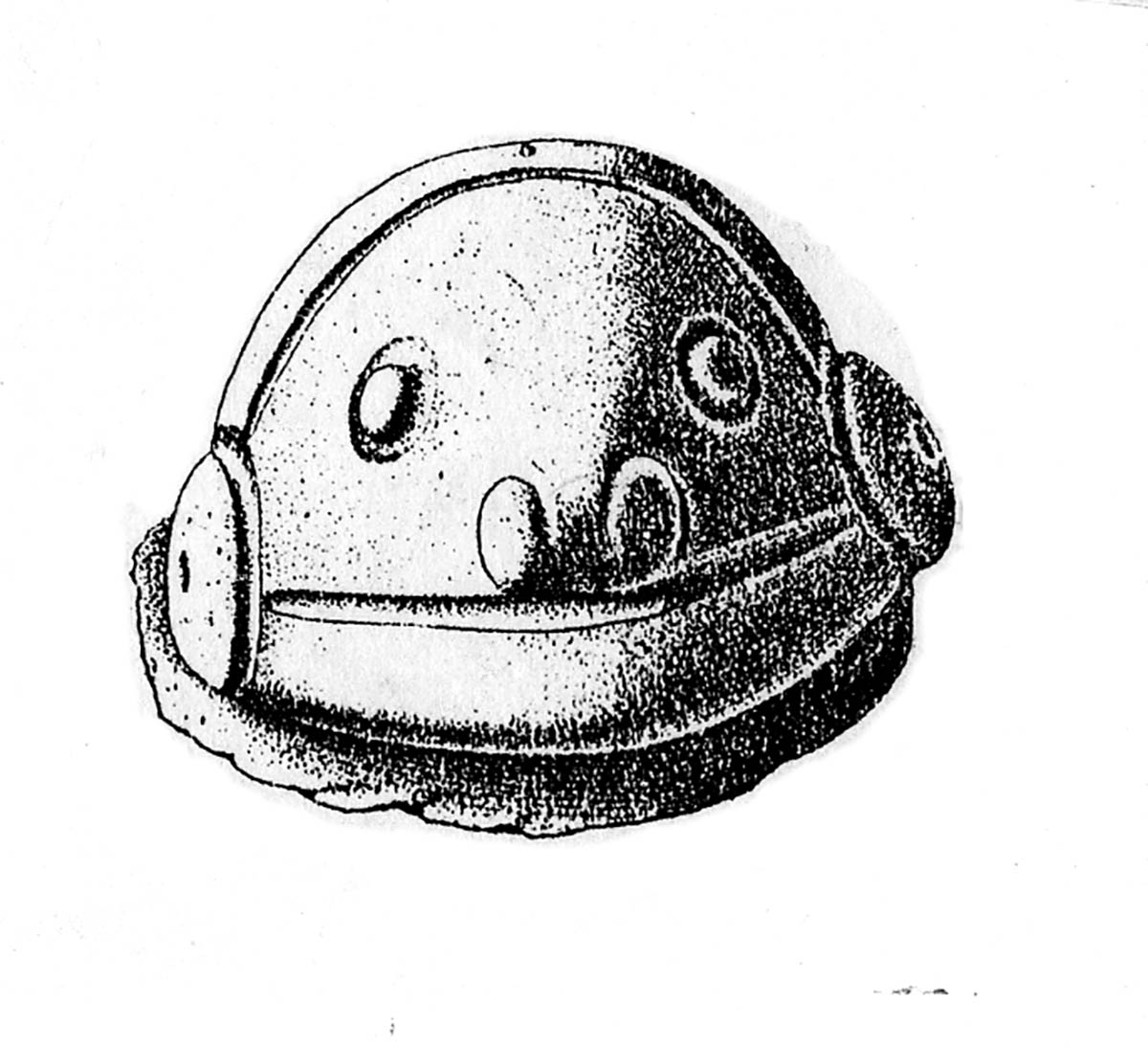
“All the American dialects being closely allied, it is said that the Aruaca, Chaima, Salive, Quaqua experienced no difficulty in adding to the knowledge of the language of his childhood, that of the common language of the country. It was thus in old Europe, where for a long time a great centralisation and combination of nations took place, it often happened that the language spoken in infancy was not that spoken at a more advanced age.”


Buy "The Book of Trinidad" by clicking here:
Amazon
Barnes & Noble

Friday, 16 December 2011

The Renaissance come to Trinidad


 The Renaissance was the European era between the 14th and 17th centuries, when art, literature, and the ideas of ancient Greece were discovered again and widely studied, causing a rebirth of activity in all these things. During that time The authority of kings, emperors, popes and dukes were overcome through the Reformation, through the farmers' insurrections, and through the idea of nationalism, re-directing thinking and feeling after the Middle Ages. Based on the ideals and aesthetics of pre-Christian times, the re-orientation towards the good, the true and the beautiful leads art and sciences to new hights. Europeans started to see themselves as freed from the fetters of the church, and went to take possession of far-away parts of the earth in brave adventures.

Some significant people of the time:
Kopernikus, Kepler, German scientists
Paracelsus, Swiss physician and researcher
Jakob Fugger, German tradesman
Sinan, Turkish architect
Tizian, Raffael, da Vinci, Michelangelo, Italian painters
Columbus, Italian discoverer
Dürer, German painter
Riemenschneider, German sculpturer
Shakepeare, Bacon, English poets
Calvin, Zwingli, Swiss reformers
Luther, German reformer
Melanchton, German religious philosopher
Cervantes, Spanish poet
El Greco, Spanish painter
Galilei, Italian scientist
Erasmus, Dutch scientist
Münzer, German freedom fighter


Christopher Columbus

The year 2011 AD presents an unparalleled opportunity for us to mount the cockpit of history and with a pilot’s eye gaze out upon the distant horizons of our historical experience. This historical experience, for those of us who live in the west, is relatively short, commencing as it does a mere 500 years ago. Some, in looking back, see only the start of an era of imperialist brutality and ecological degradation. Another point of view perceives with pleasure the commencement of an age of freedom and the divers pathways that progress has carved on the landscapes of the New World.
In 1992, which people commemorated as the “Columbus Quincentenary”, the point of view of some native Americans caught the ear of scholars, political activists and Black Awareness groups. They were offended by the idea that Columbus should have “discovered” the New World, a view that was adopted by many in the Caribbean as well. Even if their plight did not really change anything in the role that Columbus played as a historical figure, it must be seen as a testament to freedom and progress that the voices of those objectors were heard.
Anniversaries are very important in that they give an occasion to re-evaluate history. In not rallying around anniversaries, such as for example the 100th anniversary of the annexation of Tobago to Trinidad, to pick just one instance, those important occasions are wasted, and a fossilised status quo is maintained.
In the case of Columbus, the objectors negated the achievements of him as a great explorer and put his motives and consequences into opprobrium. This is understandable from their perspective, since in the aftermath of the Admiral’s coming to the Americas, their culture got nearly completely wiped out and African slavery was introduced.
However, it is important to put events and personalities of former times into their proper historical context. To belittle the past is a vice of those who seek to aggrandise themselves in the present, without having achieved greatness. As Anne Rice puts it in her “Vittorio”, a very insightful fictional book about the Florentine Renaissance, “Those who don’t do anything great, find suspect anything that is not in a perpetual state of disintegration”. This is to a considerable extent a problem of the so-called Third World, where poverty keeps many people from thriving and achieving greatness for themselves. To stay with the example of Columbus, who came to this island of ours 503 years ago, let us look at what this Admiral of the Ocean Sea really achieved in the context of his times, which was really the beginning of modernity in the western world: the Renaissance.
Dr. Felipe Fernandez-Armesto, historian, writes:
“The significance of his [Columbus’] Atlantic crossing has been belittled and denied. Yet, bearing in mind the resources of 1492, the opening of reliable routes, both ways across the Atlantic, had a permanent transforming effect on the world. No single event contributed so much towards making our unified world of today different from that of antiquity and that of the Middle Ages, which were composed of discrete patches like a decayed mosaic.”
Christopher Columbus, then, can be commemorated as the discoverer of these reliable routes in the age of the sailing ship. He found a way to use cutting-edge technology of the time to its fullest potential. In fact, it was on his second voyage to the west that he concretised the ideal route, which led south-west from the Canary Islands in the mid-Atlantic to the Lesser Antilles, and on his way back to exit north from the West Indies to catch the westerly winds. These journeys from the old world to the new forged a significant link that has stood the test of time. But much more than that, the vast populated middle region of the world, stretching from the Americas to Europe across the caravan routes to Asia, India, and the sea lanes to China now formed a chain. No more would the world be comprised of loosely joined cultures hardly speaking, barely trading with each other. With the advent of the remarkable Genoaese adventurer, we were on the way to the making of the “global village”, the whole breadth of which “could be crossed by cultural contagion, human migration and commercial exchange.”
Columbus’ discoveries of the 1490s, remarkable and special as they were to the Renaissance, belong in fact in the context of an evolving and unfolding, a changing, world.
In this period, paradigm shifts took place in the religious, cultural and economic spheres. Explorers were setting out. Marco Polo had not too long ago returned to Europe, having visited China mostly by foot. Vaso de Gamma and de la Peyrouse would circumnavigate the world in the years ahead, which would be a significant development, since only full circumnavigation offered concrete proof that the world was round! This, in fact, was one of the great goals of Christopher Columbus. He felt sure that if he sailed west into the Atlantic, he would eventually arrive in the east - a great supposition at the time.
Egypt, ancient and obscure, was undoubtedly the original source of all the sciences known to man in olden times. The scientists of Egypt - today referred to as priests - taught the Greeks all they knew. At the time of Columbus and the later circumnavigators, the most important sources of geographical writings were those of the Greeks. The great Aristotle, who lived about 400 years before the birth of Christ, had demonstrated that the world was round. His views were discarded and eventually lost to the medieval Catholic world in western Europe. They were only remembered in Islamic works which were slow to make their way westward.
Another Greek, Pythagoras, born 472 BC., was a product of the mystery schools of Egypt. He too knew that the world was round. Pythagoras, amongst his several proofs, pointed out that the shadow of the earth cast upon the moon during a lunar eclipse was round, demonstrating that the surface of the earth must be round too, from whatever angle one looked at it.
This knowledge led to the belief that it would be possible to reach Asia by sailing westward from Europe. Columbus, in attempting to prove this, operated in the context of great personal bravery: it was not commonly accepted that the earth was indeed round! The value of his “discoveries” is thus to be found in the fact that he proved a scientific fact, that he conquered superstition and stupidity in the people who insisted the world was flat.
This value stands for itself and cannot be debased with the argument that the Americas and the Caribbean had been discovered by people already, that the hemisphere was populated, and that the Scandinavians had “discovered” it in previous centuries.
In analysing history, one has to be careful not to unravel events like an old sweater, and to end up with ends of wool that show nothing of the intricate knitting pattern. To judge Columbus anything other than a superb Renaissance man by arguing that it was because of him that enslaved people from Africa would suffer in the colonies would be to make the sheep responsible for the sweater!

Spanish Conquistadors

In the years immediately following Columbus’ discovery of Trinidad in 1498, the interest of Spain was concentrated on the larger or her new-found possessions to the north. In the earlier years, Trinidad was visited by the ships of those engaged in discovery, who, after taking wood and water, passed on. In time, the beauty and fertility of this island attracted attention. There was also always the prospect for gold. The island was seen as well-populated, thus a source of labour, mostly from the point of view of forced labour amongst the Amerindians. By 1509, Diego Columbus, son of the Admiral and governor of San Domingo, was buying Amerindians from Trinidad for 150 ducats each to work in the pearl diving industry on the island of Cubagua.
With gold ever in mind, the Spanish King directed attention to the exploration of the natural resources of Trinidad. In 1511, he instructed Diego to cease removing slaves from Trinidad and to send men to explore the island for gold. The two caravels dispatched from San Domingo, sailed southward in the blinding heat of May, careful to bypass islands known for the man-eating habits of their inhabitants. With great trepidation, they put a boat ashore at the island of Redonda, off the coast of Montserrat. Her volcano was idly smoking. The sailors’ intent was to capture and kill the giant turtles nesting there, the meat of which they salted. They set sail once more and touched upon the island of Guadeloupe for water and to rest the crew, before hazarding the next leg of the journey that would bypass the windward islands and take them to the towering cliffs of Trinidad and its port of entry, known as the Boca del Dragon.
Before them lay the great Gulf of Paria, and about their small and somewhat fragile vessels great whales disported, nursing their young and mindlessly enjoying the twilight of their existence.
From the shore, a small suspicious gathering of Amerindians saw for the third or fourth time these strange craft appear as if by magic. In the waters, just off their village that they called place of the silk cotton trees because of the giant trees that came down from the mountains to the mangrove coast. Later, the Spaniards would pronounce that turn of phrase as “Cumucurapo”, to be remembered hundreds of years later as Mucurapo.
Captain Roderigo de Bastidas brought his men ashore. They were sweating in their heavy armor and European clothes. Banners were flying, bearing the arms of Spain and depictions of the Virgin of Compostela. They made their way through the tangle of mangrove into the savannah lands studded with great trees, that would many centuries later be called Woodbrook, and whose streets would be decorated with the playful names of the children of Johann Benjamin Gottlieb Siegert, a German who found some of South America’s real riches in the plants that grow there, concocting herbs and tree bark into his famous Angostura Bitters.
The expedition followed the almost dry riverbed of the Rio Santa Anna, into the hills, to an area known as Ariapita. The Carib warriors moved purposely forward, their naked bodies painted bright red with roocoo against the mosquitoes. In the distance could be heard the roar of a waterfall. In the trees above, the bellbirds called. In the brilliant sunlight, the high cliffs seemed indeed to sparkle with a golden light. Golden nuggets appeared to protrude from the rock’s face, and the Spaniards, excited by their find, scrambled up the hillside. The mountain pools below them reflected in perfect union the circle of the sky.
The search for gold in Trinidad was not successful. Probably the Amerindians showed the Spaniards the deposits of marcasite, fool’s gold, and it was not long before expectations in this direction were proved unjustified.

Don Antonio Sedeño

Interest in Trinidad thereupon lapsed, except as a place for enslaving Indians to be sold in other islands until 1520, in which year, on December 15th to be exact, the King of Spain granted the conquest and pacification of the island to Don Antonio Sedeño, the contador of San Juan, Porto Rico. Sedeño was named governor and captain general. Don Antonio was thus Trinidad’s first governor. He was a tough soldier who had made adventure his life’s work. Shortly after his appointment to the Indies, his colleagues were sending adverse reports about Sedeño, and in 1518, he was suspended from office and imprisoned on the allegation of having seduced a very young girl from a convent in Porto Rico.
Allegedly, Sedeño had a “turbulent nature”. Put into prison for the offense, he set it on fire and escaped aboard a ship leaving the port. Diego Columbus had Sedeño acquitted and reinstated after an investigation.
The following year saw him back in jail, this time for making free with His Majesty’s revenue. He was said to have “put his hands deeply into His Majesty’s funds” with disturbing the island and fermenting factious disorders. He was sentenced to pay 5000 pesos. The index of papers of the Council of the Indies show Don Antonio in and out of jail. Such is the record of the man who aspired to conquer and pacify the island of Trinidad!
His brother officers were glad to see him go. To the authorities in Spain, he was a man of wealth with resources suitable for the conquest of Trinidad, a man possessed of an undoubted courage - exactly the qualities of leadership well suited to a conquistador!
When one thinks of conquistadors, the names of Cortés and Pizzaro come to mind, iron-clad men who went to Mexico and Peru. Men who burned their ships on the beaches of the New World and resolutely set out to conquer and in fact destroy civilisations that were thousands of years old. What those rough-edged, ignorant Spaniards mindlessly destroyed were in fact precious records of those civilisations’ knowledge of precessional astronomy, mathematics and geometry. Their vast libraries were annihilated, and the information of the “Gods coming to earth” was forever lost. Probably, the loss of their archives was more than anything else the undoing of the Aztec and Inca civilisations. Montezuma, emperor of the Mexicans, really believed that Hernando Cortés was the God prophesied to return.
The Spaniards at that time had come out of a terrible war for the reconquest of Spain. Generations of an aristocratic knightly Catholic class had clashed with the flower of Islamic warrior culture. Victorious against the ‘infidel’, the Catholics destroyed the high culture established by the Moors in Europe and proceeded to cross the Atlantic to wipe out another.
Trinidad received its first conquistador, Don Antonio Sedeño, in 1531. The frail caravels sailed for the Indies from the port town of San Lucar de Barrameda in Spain, carrying 70 men and some horses. He had a fortunate and successful crossing, and as was the custom, made landfall at the south east corner of the island, just about where the gas pipelines now come out of the Atlantic ocean on Galeota Point. He proceeded along the south coast, past Moruga, to enter the Gulf of Paria by the Serpent’s Mouth, and sailed straight north to seek for the Indian Cacique named Turpiari, who was the ruler of the north of Trinidad. These two became friends, and it is said that their relationship endured many decades.
Trinidad was hard for Sedeño to handle. He had arrived at a time when a war of Amerindian conquest was being waged between rival tribes of Caribs. He was caught in the primitive politics of the day, and beset by Carib warriors who were not afraid to die for their island. They attacked the Spaniards again and again, destroying Sedeno’s  stockade at Mucurapo in a series of bloody battles. Their bravery and commitment should be known and remembered with the same respect as the Apache braves: Geronemo, Crazy Horse and Little Bear. These were in fact the first heroes of Trinidad. They fought and died for this island, which they knew as Iere, the Land of the Hummingbird.
It is because of the valor of the tribal people that the hummingbird, now a national symbol, is in the centre of the cap badge and buttons of both the Trinidadian police force and the regiment, and is, in fact, saluted with respect.
Don Antonio did not conquer Trinidad. He died in the high forest of the province of Meta on the mainland, organising yet another attempt to colonise Trinidad. He had left his fortune behind in Spain and had come out with his ambition and his youth to make a fortune. He had earned the friendship and the respect of the caciques throughout many difficult years - no mean feat in those times - a success which should give him a notable place in the ranks of the conquistadors.
Today, if  you visit President’s House, there is a plaque at the entrance bearing the  names of Trinidad and Tobago’s governors. His is the very first.

Tuesday, 2 August 2011

The Early History of Trinidad

Columbus discovers Trinidad

“We saw houses and people on the spot and the country round was very beautiful and as fresh and green as the gardens of Valencia in the month of March.”

wrote Christopher Columbus in his log on 31st July, 1498, the day he discovered Trinidad on his third voyage to the New World.

Columbus sailed through the straits which he called the ‘Serpent’s Mouth’ between the South American continent (which he thought to be another island and called it Isla Santa, Holy Island) and Trinidad, named for the Holy Trinity. His immediate predicament was to get fresh water for the crew of his three ships, the ‘Santa Maria de Guia’, the ‘Castilla’ and the ‘Gorda’.

“I then gave up our northward course and put in for the land; at the hour of complines we reached a cape which I called Cape Galera, having already given to the Island the name of Trinidad, and here we found a harbour which would have been excellent but there was no good anchorage.” (Christopher Columbus)

Sailing along the south coast of Trinidad, looking for a bay to anchor, the Spaniards gave names to Trinidad and to several features on the island. In the Gulf of Paria - which they named ‘Mar Dulce’, due to the high percentage of fresh water, they had an encounter with the Amerindians, marvelling at both the nakedness of the tribespeople and at the beautiful gold and pearl jewellery they were wearing.

“These people, as I have already said, are very graceful in form, tall and lithe in their movements and wear their hair very long and smooth. They also bind their heads with handsome worked handkerchiefs which from a distance look like silk or gauze; others use the same material in a longer form wound round them so as to cover them like trousers and this is done by both the men and the women.”

The Indians told Columbus that there was a vast land southward, but after sailing some miles along the southern part of the Paria peninsula the ageing explorer decided to go northward, to Hispaniola which was familiar to him. 18 days later, on the 17th August 1498, Columbus and his ships left the Gulf of Paria through the Dragon’s Mouth. The island of Trinidad became a colony of Her Most Catholic Majesty, Isabella of Spain. And the arrival of the Admiral opened the flood gate for treasure seekers which resulted in almost the whole native population being wiped out.

“The sun was then in the sign of Virgo over their heads and ours; therefore all this must proceed from the extreme blandness of the temperature which arises, as I have said, from this country being the most elevated in the world and nearest to the sky.”

The Legend of El Dorado

The Spaniards were convinced of the existence of the legendary City of Gold, and ‘el dorado’ or golden man. All over South and Middle America, the conquistadores, dauntless iron-clad men, heroically battled against nature herself and against Amerindian tribes to win the gold-rich civilization for the Spanish crown. They were told by the Amerindians of the vast riches to be found up the Orinoco. These ignorant Europeans never considered the possibility of the mere ritual use of gold or the distortion of the Indian’s stories, they heard only what they wanted to hear - El Dorado. They imagined it to be a great king, covered in gold, and a city literally made from the precious metal.

Trinidad became a very strategic island. It became the port of the Spaniards - Puerto d’España, the starting point for the journey up the Orinoco River. The island was the stepping stone for the heroic men who were filled with the passion of conquering the splendid treasures of the Golden City. Four conquistadores came to Trinidad: Don Antonio Sedeño in 1528, Don Juan Ponce de Leon in 1571, and finally Don Antonio de Berrio y Oruña in 1580, and finally the British Sir Walter Raleigh in 1595.

Today we know that El Dorado did not exist in the imagined form of the Iberians. But what were the origins of the legend?

Some tribal peoples of South America assigned great significance to the summer solstice to mark the passing of time. On that day, the 21st June, when the sun passes through the highest point in the sky, the zenith, a festive ritual was enacted by some Amerindians in an area in present-day Colombia. A circular lake still exists there, and on the 21st June the sun’s golden reflection filles the surface of it. On that special day, a cacique was covered with resin and sprayed with gold dust. So ‘el dorado’ was actually a ‘Golden Man’ and not a ‘Golden City’!

But the swamps, the mosquitoes, the silence and the noises of the jungle continued to breed tales of huge buildings made of gold, a mountain of crystal that sparkled in the sun, golden nuggets as big as fists and emeralds and sapphires in abundance. Those tales were spiced by stories of man-eaters, who poured molten gold into the white victims’ mouths, who fattened up negroes in order to eat them later, and of ‘anthropohagi’, men whose heads grew between their shoulders.

Trinidad from 1592 to the 1770s

With the foundation of San José de Oruna (St. Joseph) in 1592, Trinidad had acquired the formal structure of a Spanish colony. But for nearly 200 years it remained undeveloped and isolated. It had no gold or silver, and lay far from the main shopping routes to Spain. So instead of large plantations, worked by gangs of slaves, producing food crops for export to Europe, Trinidad was the scene of little cultivation by a few Spaniards, Indians, a handful of African slaves, preoccupied with survival on scattered clearings in the vast forest.

Early in the 17th century, cotton and tobacco began to be cultivated. Cocoa became Trinidad’s major product between 1670 and 1725, but in 1725 the crop failed, probably due to disease. Up to the 1770s, agriculture was small-scale, with the Indians and Spanish settlers producing small food crops in their gardens.

But already the island’s significant feature, its cosmopolitan people, began to take shape. The cross-breeding of its first settlers produced the ‘mulatto’ - half African, half European, the ‘mestizo’ - half Amerindian, half European, and the ‘zambo’ - half Amerindian, half African.

After the failed cocoa crop in 1725, the non-Indian population declined to a mere 162 adult men, of whom only 28 were described as ‘white’, that is Spanish. Forty years later, the population was estimated at 2,503, with the Christianised Indian population at 1,277.

Up to the 1780s Trinidad remained a mainly Amerindian society, though the Indian population had declined rapidly after the encounter with the Spanish conquistadores in the early 1500s. Capuchin missionaries were given the task of converting them between 1687 and 1708, and they established mission settlements, some of which survived as Indian villages well into the 18th century, e.g. Savanna Grande.

In 1784, the Spanish governor left the derelict little settlement of San José and established himself in Puerto d’España. Eight years before, in 1776, one year after the Spanish Empire had come under the influence of the comparatively reform-minded Bourbon kings of France, a decree had authorised foreign Catholic settlement in Trinidad and other colonies. It was under this decree that Trinidad would suddenly awaken into life in the late 18th century.